Composer - Your Market Views, Built in Minutes and Kept Up to Date

· 8 min read

Colin Hartley
Colin Hartley
ODSL and Fusion Creator

Introducing Composer

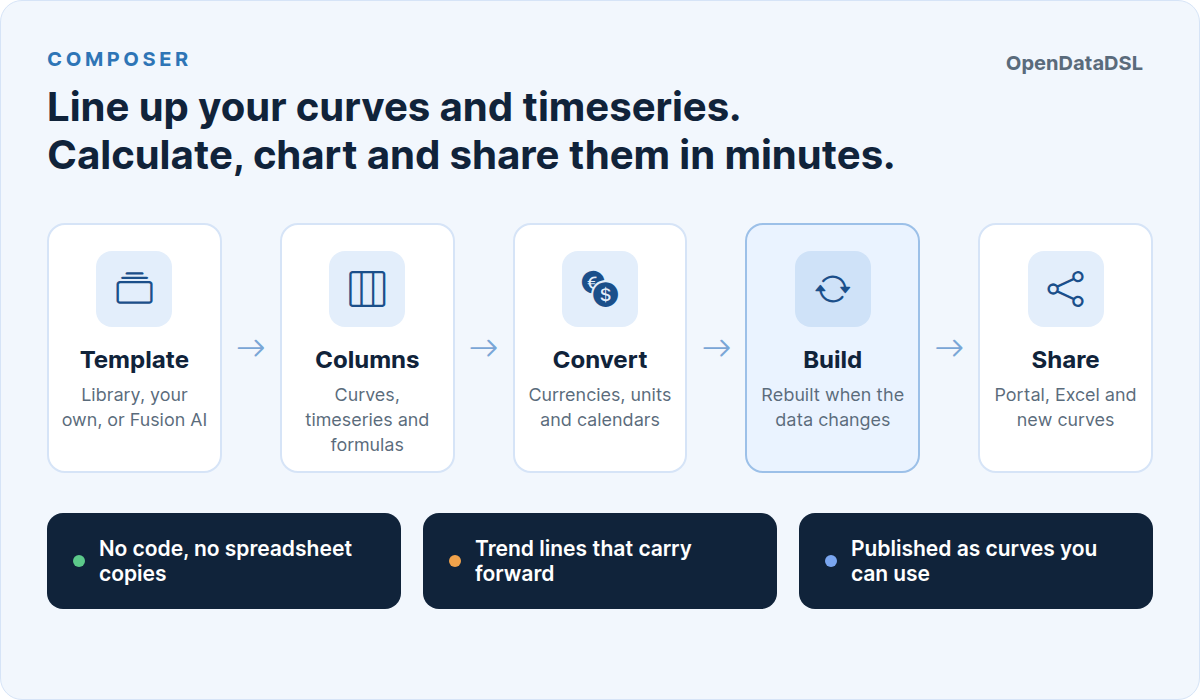
Every energy and commodity team has a set of views it looks at every day: spreads, margins, curves in another currency, the front month as a history. Most of them are built in spreadsheets.

Composer builds them on the OpenDataDSL platform instead: line up curves and timeseries side by side, calculate what you need, and chart it, with no code and no copies of the data, rebuilt every time the data changes.
Validation - Trust Every Curve and Timeseries Before Anyone Uses It

· 7 min read
Colin Hartley
Colin Hartley
ODSL and Fusion Creator

Introducing Validation

Every energy and commodity business depends on market data being right: forward curves, settlement prices, fundamentals, FX rates. Most of the time it is. The problem is the rest of the time.

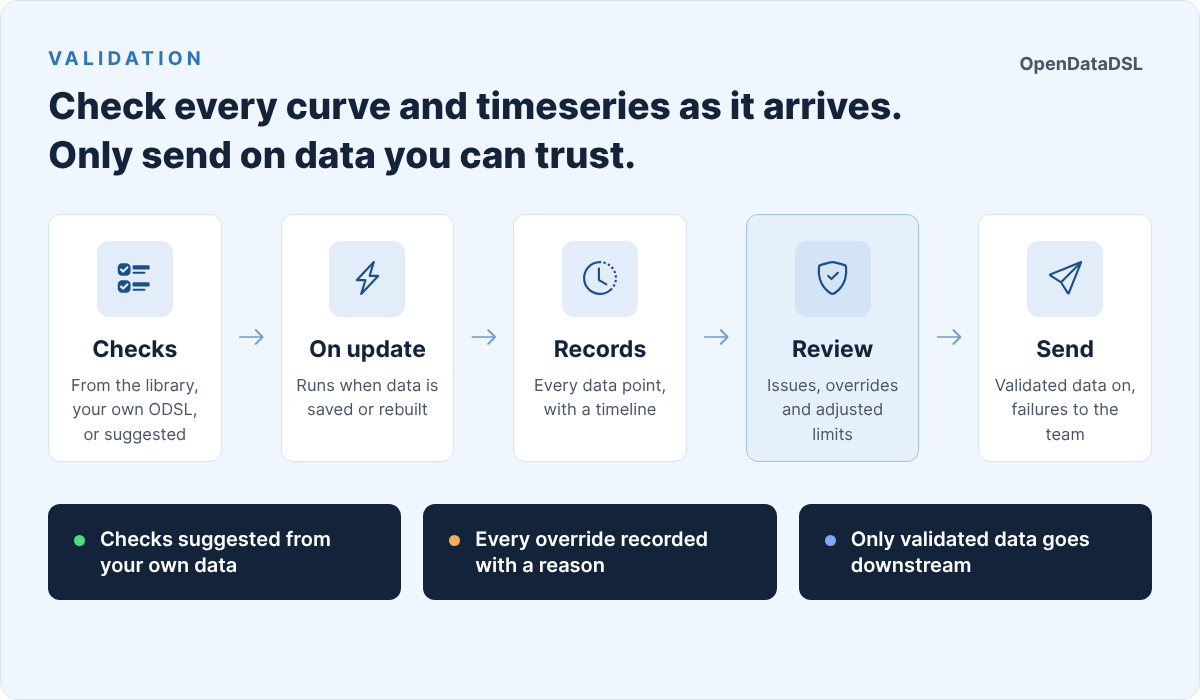
Validation checks every curve and timeseries on OpenDataDSL as it arrives, keeps a record of every data point, and makes sure only data that has passed, or that someone has signed off, goes any further.

Fusion AI Playbooks - Your Best Process, Run the Same Way Every Time

· 9 min read
Colin Hartley
Colin Hartley
ODSL and Fusion Creator

Introducing Fusion AI Playbooks

Every energy and commodity data team has jobs it repeats again and again, and each one has a right way to do it. Usually that way lives in one person's head.

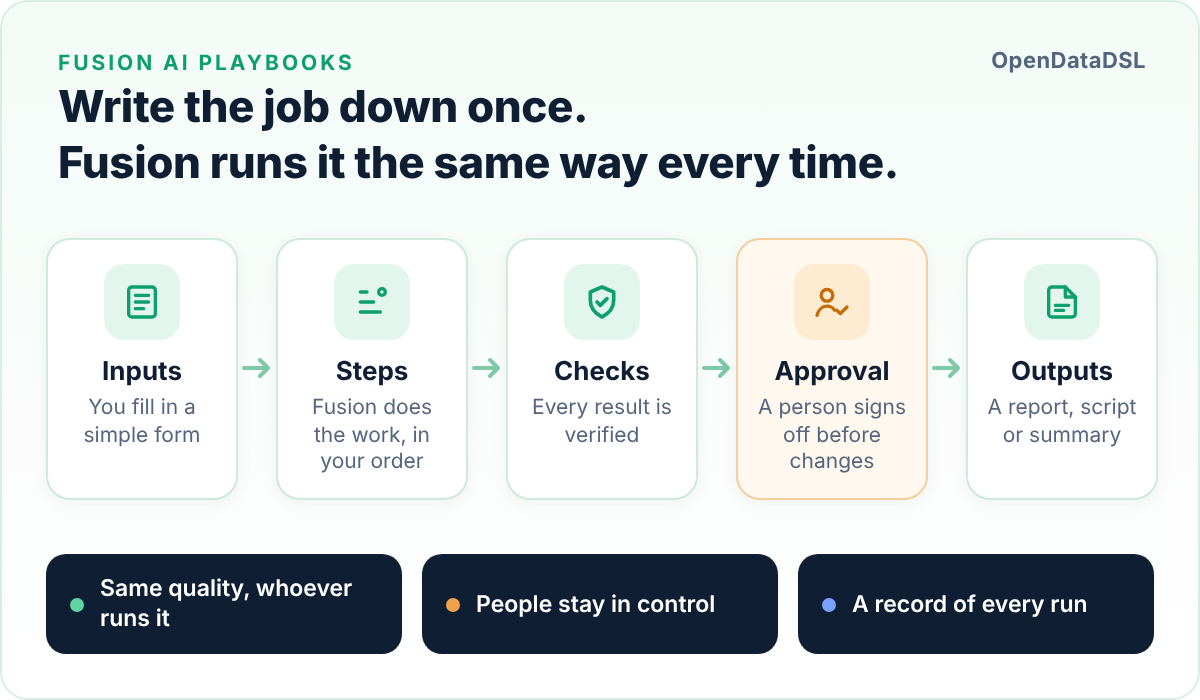
Fusion AI Playbooks let you write the job down once, in plain language, and have Fusion run it step by step on your OpenDataDSL data: checking its own work, asking before anything changes, and keeping a record of every run.

The Hidden Cost of Managing Market Data Feeds In-House

· 8 min read
Colin Hartley
Colin Hartley
ODSL and Fusion Creator

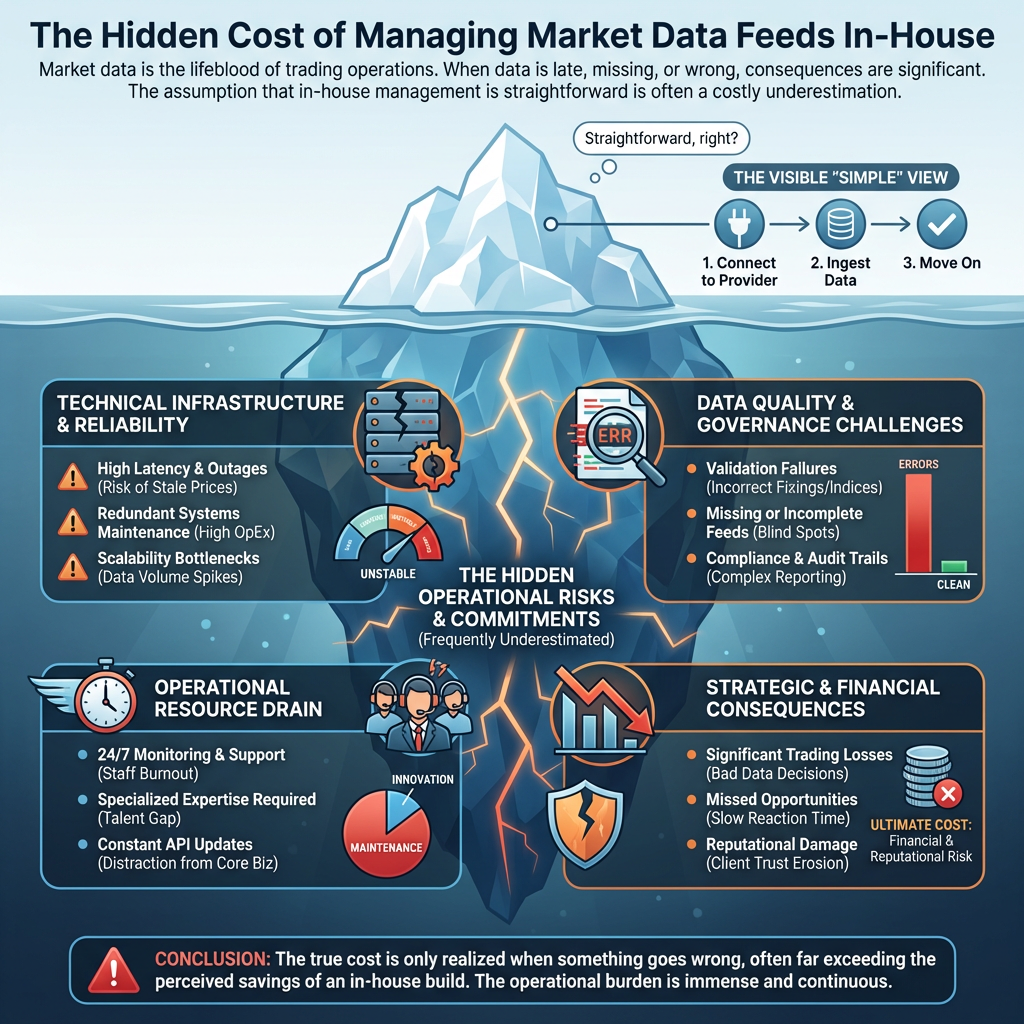
Every Feed Is a Risk You're Choosing to Own

Many organisations assume that managing market data feeds in-house is straightforward: connect to a provider, ingest the data, move on. In practice, it is one of the more demanding operational commitments a data or technology team can take on. This post sets out the risks that are frequently underestimated.

Legacy System Migration

· 11 min read
Colin Hartley
Colin Hartley
ODSL and Fusion Creator

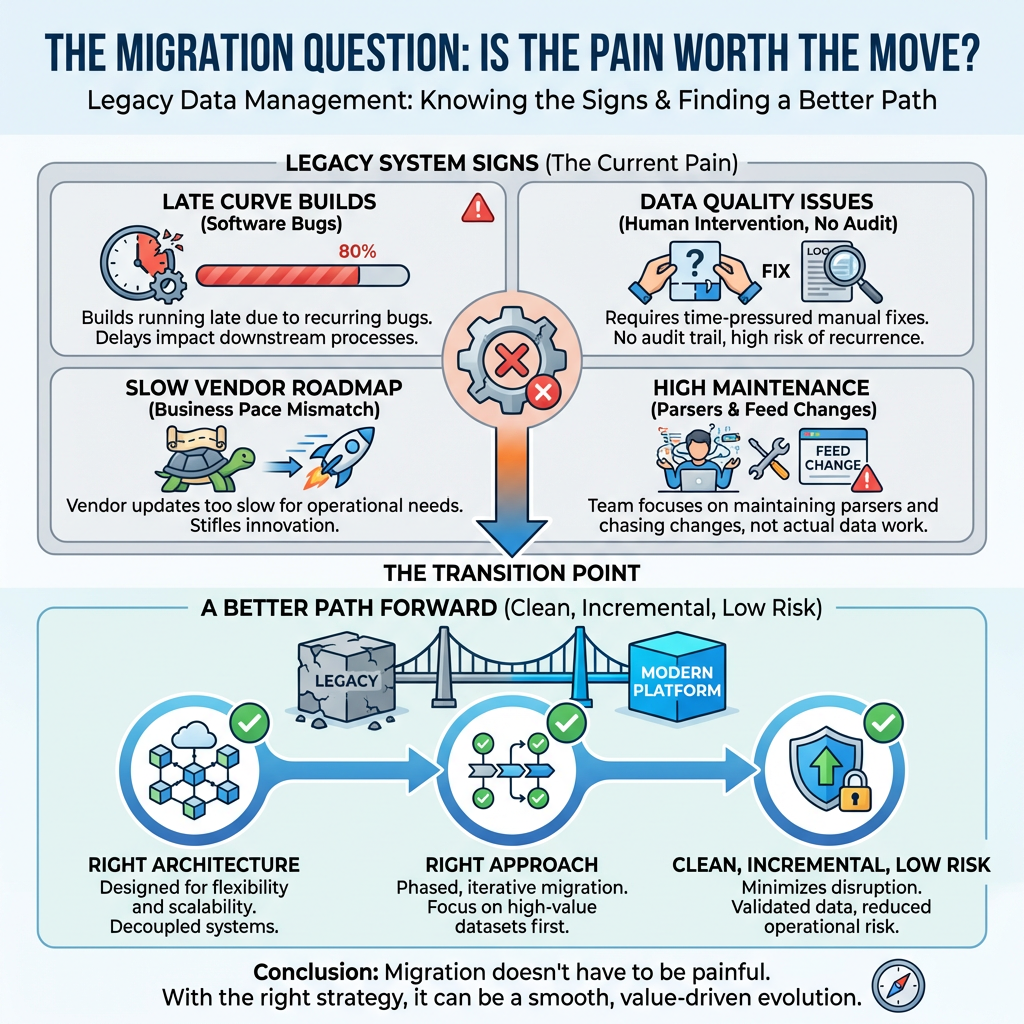
Leaving Legacy Data Management Behind Doesn't Have to Be Painful

If your organisation is running a legacy data management system, you already know the signs. Slow curve builds. Software bugs that have been there for months. Data quality issues that require manual fixes under time pressure.

The question isn't whether to move - it's whether moving is worth the pain.

We think it doesn't have to be painful.

SMART Identities

· 6 min read
Colin Hartley
Colin Hartley
ODSL and Fusion Creator

Identities Are the Foundation of Smart Data Management

The way your organisation identifies and connects data assets is either your greatest competitive advantage or your biggest hidden liability.

With OpenDataDSL, it's the former.

How to Navigate Market Shocks

· 8 min read
Simon Jackson
Simon Jackson
Operations Director

When the Strait Closes

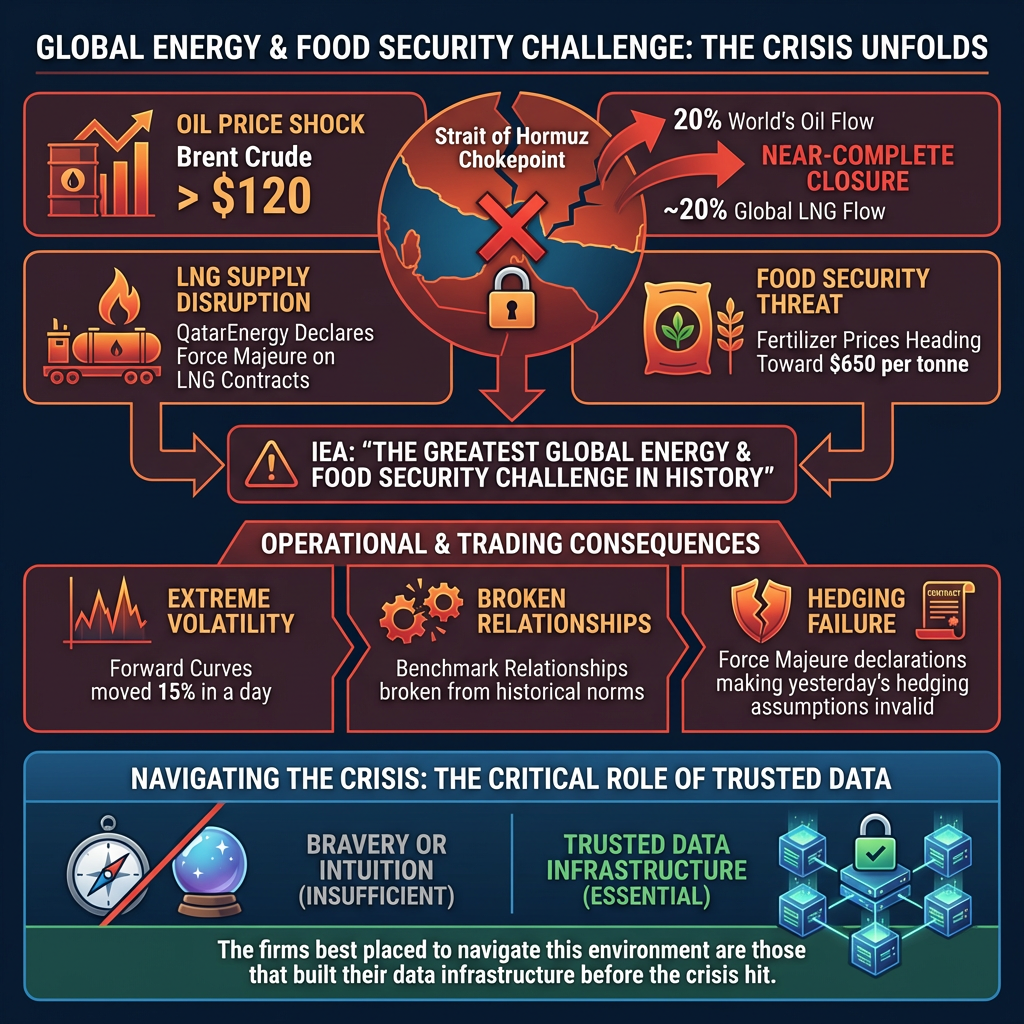
Brent crude above $120. QatarEnergy declaring Force Majeure on LNG contracts. Fertilizer prices heading toward $650 per tonne. The near-complete closure of the Strait of Hormuz, the chokepoint through which 20% of the world's oil and one-fifth of global LNG normally flows, has created what the IEA is calling “The greatest global energy and food security challenge in history.”

Running Python Tasks

· 8 min read
Colin Hartley
Colin Hartley
ODSL and Fusion Creator

Run Python Inside OpenDataDSL

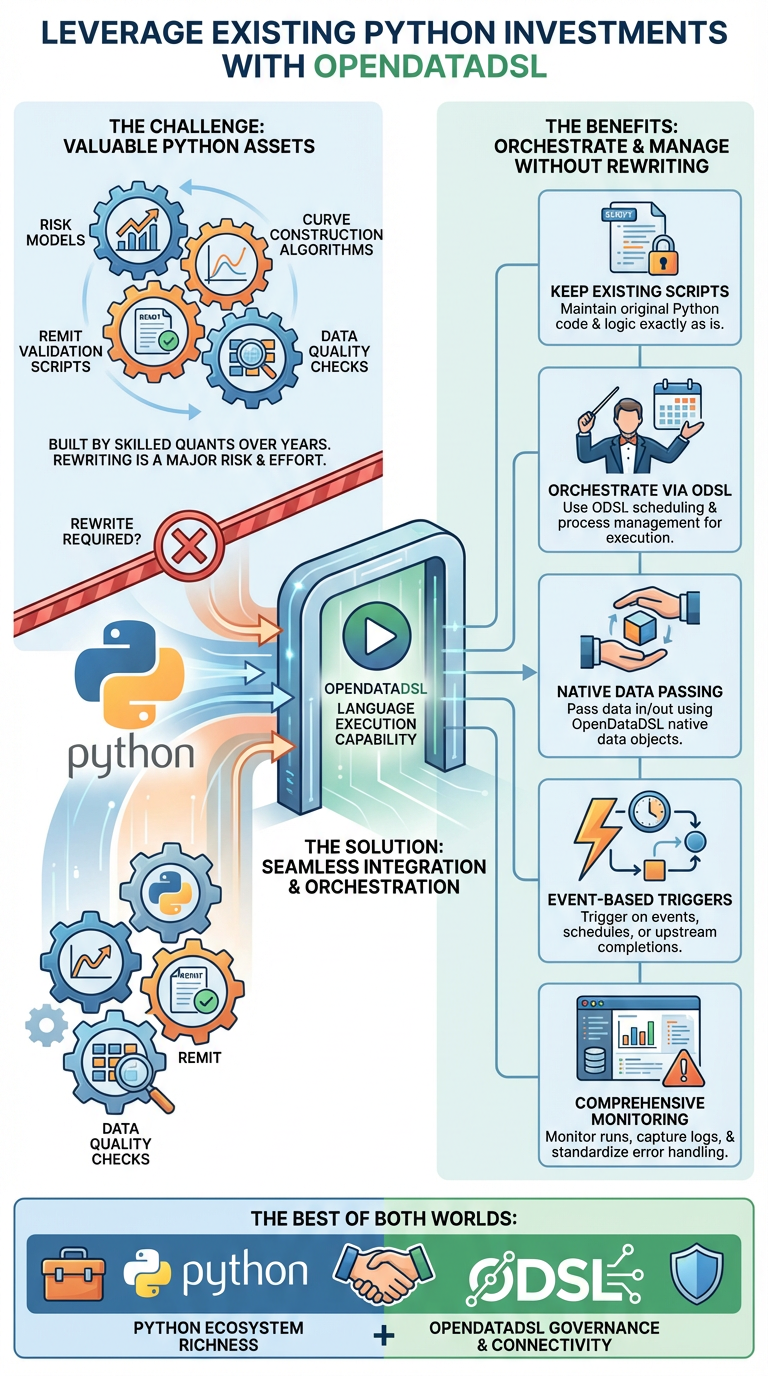
OpenDataDSL has always been designed around flexibility. Our ODSL language gives energy and commodity trading professionals a powerful, domain-native way to build data pipelines, model curves, and manage complex data assets. But we've long recognised that the broader data and quant world runs on Python, and for many teams, R, NodeJS, or other specialised tools are equally central to their workflow.

That's why we've built something we're genuinely excited about: native support for running Python. directly as part of your OpenDataDSL processes. No wrappers, no hacks, no separate orchestration layer - just seamless integration with everything else on the platform.