Product v Platform

Why it matters
There's a moment every energy data manager remembers. A regulation changes with a 90-day deadline. A critical data source goes dark. A new trading partner needs integration and your vendor says "we can scope that, I'll have someone reach out about timeline." That's when you realize: you don't control your own infrastructure. Your vendor does.
And they're busy with someone else's emergency right now.
Why the Difference Matters for Energy Data Management
If you work in energy trading or commodity data management, you've probably had this experience:
You need functionality your system doesn't support. Maybe it's a new data source. Maybe it's custom reconciliation logic. Maybe it's integration with a trading partner's API.
So you reach out to your vendor. They're helpful. They understand the requirement. And then they tell you one of two things:
- "We can add that as a feature request. It'll go into our backlog for prioritization."
- "We can scope that as a professional services engagement. I'll have someone reach out about timeline and cost."
Either way, you wait. And you pay. And you stay dependent on your vendor's priorities, capacity, and timeline.
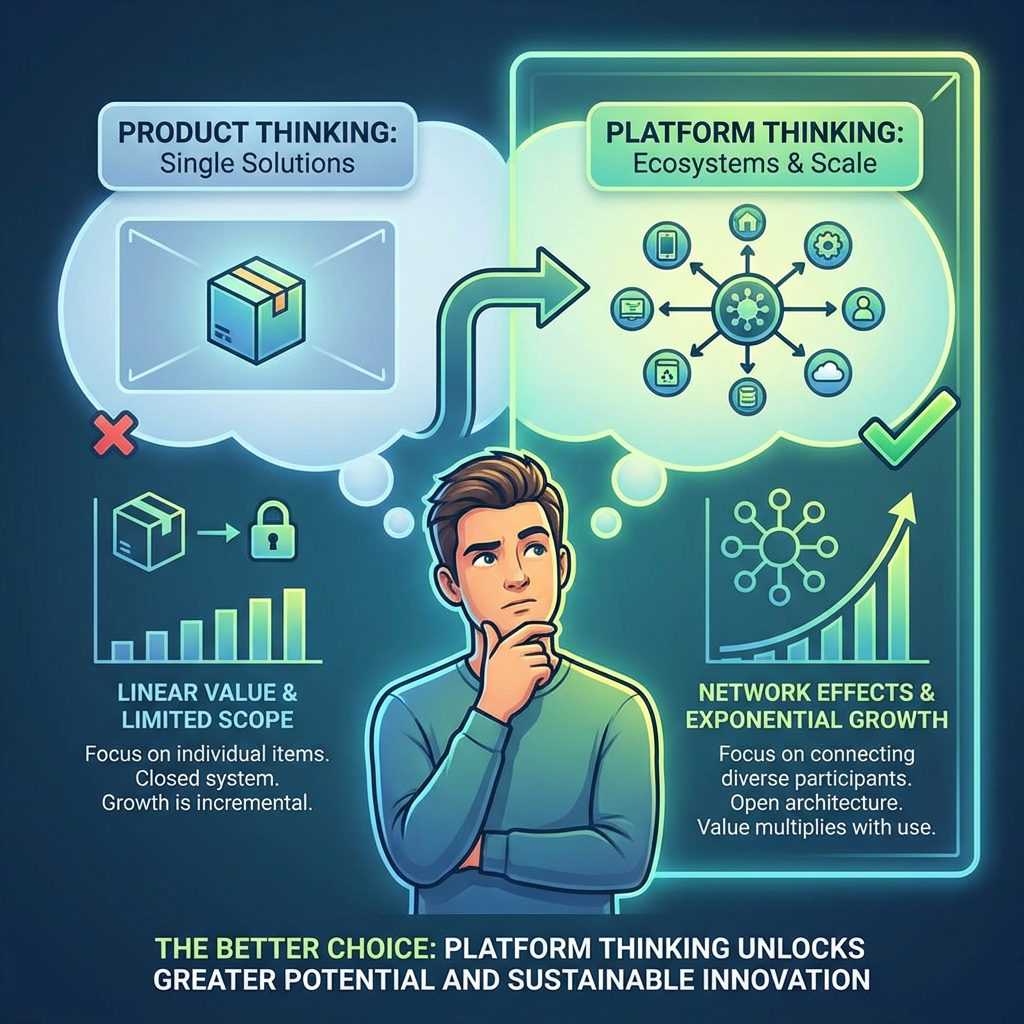
This is the fundamental difference between a product and a platform. And in energy markets that change by the week, that difference is becoming critical.
What Makes Something a Product?
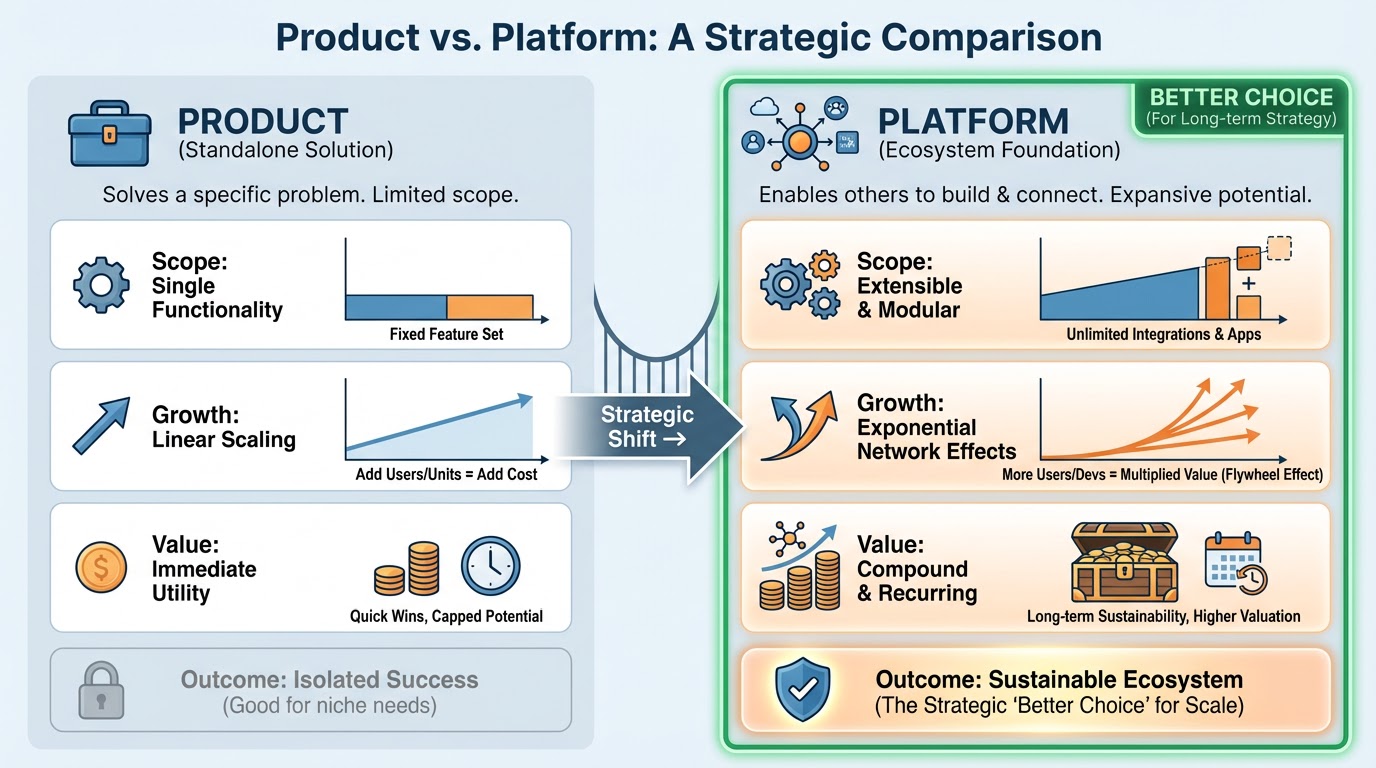
A product is software that does specific things in specific ways. It has features. It has a roadmap. It has boundaries.
When you need the product to do something it wasn't built to do, only one group can help you: the company that made it.
This model worked well for decades. Vendors built sophisticated products that solved complex problems. Clients got best-in-class functionality without having to build it themselves. Everyone was happy.
But the pace of change has accelerated. New regulations appear with months, sometimes weeks of implementation timelines. New trading instruments emerge. New counterparties need integration. New data sources become business-critical overnight.
And suddenly, the product model shows its limitations.
The Hidden Cost of Vendor Dependency
Let's be honest about what happens when you need something your product doesn't do:
Feature Request Path:
- Submit detailed requirements
- Vendor assesses feasibility and business case
- Request gets prioritized against all other clients' requests
- Development happens (if approved)
- Testing and QA
- Release in next major version
Timeline: 6-12 months. Maybe longer. Maybe never, if your use case doesn't align with their product strategy.
Professional Services Path:
- Vendor scopes the work
- You get quoted time and materials
- Professional services team gets scheduled (when they have availability)
- Custom development happens
- You own the maintenance and upgrades
Timeline: 3-6 months, plus ongoing costs. And you're still dependent on their team for changes.
The real cost isn't just time and money. It's strategic flexibility. Every day you wait is a day your business adapts more slowly than it could. It's competitive advantage surrendered to companies that can move faster.
What Makes Something a Platform?
A platform is different. A platform gives you the tools to extend it yourself.
The vendor builds the infrastructure, the APIs, the frameworks. But you, or your team, or a partner you choose, can build on top of it.
When you need new functionality, you don't submit a ticket. You build it. Or you hire someone who can. The choice is yours, not your vendor's.
This isn't about replacing vendors with in-house development teams. It's about having the option. It's about controlling your own timeline and priorities.
What This Looks Like in Practice
At OpenDataDSL, we made a deliberate choice to build a platform, not just a product. Here's what that means for our clients:
Scenario 1: Trade Reconciliation
One of our clients needed trade reconciliation functionality. In the traditional model, they would have submitted a feature request or commissioned a professional services engagement.
Instead, they built it themselves using ODSL, our data management language. We helped them get started. We provided guidance. But they own the code. They maintain it. They extend it when they need to.
Today, they're adding new trading sources and writing matching rules across counterparties and ETRM systems. No tickets. No billable hours. No dependency on our development roadmap.
Scenario 2: Data Source Coverage
The question we get asked most often is: "What about data coverage?"
Fair question. We're newer than many of our competitors, so our catalogue is still growing.
But here's where the platform approach changes the equation: We've built AI agents that allow anyone, our team or our clients, to add new data sources through a simple prompt.
Describe what you need. The AI figures out how to collect it, how to schedule it, and how to validate it. The data gap doesn't stay a gap for long.
In the product model, you wait for the vendor to add a source to their catalogue. In the platform model, you add it yourself. Or we add it for you. The choice is yours.
Scenario 3: Custom Workflows
Our clients create their own workflows and data exports using ODSL. It's a published API. We can write it, or they can.
When a regulation changes, they don't wait for us to update the product. They update their workflow. When they onboard a new trading partner, they write the integration themselves. When they need data formatted for a specific downstream system, they build the export.
That choice, who controls the timeline, who owns the code, who sets the priorities, sits with them, not with us.
The Platform Mindset
Making the shift from product to platform isn't just about technology. It's about mindset.
Product mindset:
- "Does this vendor's product do what I need?"
- "What's on their roadmap?"
- "Can they build this for me?"
Platform mindset:
- "Does this platform give me the tools to build what I need?"
- "Can I control my own roadmap?"
- "Can I extend this myself, or hire someone to do it?"
The product mindset made sense when markets moved slowly and requirements were stable. The platform mindset makes sense when you need to adapt faster than any vendor's development cycle can keep up with.
When Products Still Make Sense
Let's be clear: platforms aren't always the answer.
If you have stable requirements, no custom workflows, and no need to move faster than your vendor's roadmap, a product might be exactly what you need. Why build and maintain functionality you can buy off the shelf?
But if you're in energy markets, where regulations change quarterly, where new instruments appear constantly, where competitive advantage comes from adapting faster than your peers, the platform model gives you options the product model simply can't.
The Real Question
The question isn't whether your current vendor's product is good. It probably is. Most commodity data vendors build excellent products.
The question is: do you control your own roadmap, or does your vendor control it for you?
When a regulation changes with a 90-day implementation window, can you adapt on your timeline? When a new trading partner needs integration, can you build it without waiting for professional services availability? When you need a data source that's not in your vendor's catalogue, can you add it yourself?
If the answer is no, you're not using a platform. You're using a product. And in markets that change as fast as energy markets do, that dependency is strategic risk.
What Comes Next
The energy data industry is at an inflection point. The vendors who built the products that served us well for decades are still building excellent software. But the market is demanding something different now.
It's demanding adaptability. It's demanding ownership. It's demanding platforms, not just products.
The companies that recognize this early, that shift from asking "what can my vendor do for me?" to "what can I do with my vendor's platform?" are the ones who'll move faster, adapt quicker, and compete better.
The question is: which side of that shift do you want to be on?
Want to explore what a platform approach could do for your energy data infrastructure? Let's talk. No sales pitch—just a technical conversation between people who understand the problem space.
Fill out the form below, we will contact you to arrange a personally tailored demo.

How about a demo?
Our team is here to find the right solution for you, contact us to see this in action.
Fill out your details below and somebody will be in contact with you very shortly.